
About Us

About

Providing the best insurance policy to customers.

Notable characteristics of the region include the harbor town of Lüderitz and its fishing and boat building industry, the diamond areas along the coast—both on and off shore—with Oranjemund as the main center, mining enterprises in the southern part of Namibia (Klein Karas area, Rosh Pinah), the Kudu Gas field in the Atlantic Ocean near Lüderitz and small-scale industries in Lüderitz and Keetmanshoop. The Hot Water Springs at Ai-Ais, the Hot Water Springs in Warmbad, the Kokerboom Forest near Keetmanshoop, the Fish River Canyon (the second largest in the world) the Brukaros Mountain (a former volcano) near Berseba, the coastal town Lüderitz and several guest and game farms have become important tourist attractions.

The tourism industry has the potential for further expansion. The economic growth potential of the area is considerable but needs an intensive general development policy. It is a profitable tax-generating area, which predominantly comes from diamond mining for the central government. The main railway line and two main trunk roads give access to South Africa.

Keetmanshoop is considered the capital of the south and has direct air, railway and road links with Windhoek. Its airport is of international standard and suitable for international air traffic. The airfield at Kolmanskop near Lüderitz is regularly visited by Air Namibia on its flights to Cape Town and Windhoek. Well-developed landing facilities also exist at Oranjemund.

History of Bethanie and Tourist Attractions

About Bethanie

Bethanie is a Village in the ǁKharas Region of Southern Namibia. It is one of the oldest settlements in the country. Bethanie is situated on the C14 road between Goageb and Walvis Bay, 100km west of Keetmanshoop. It has a population of about 4,500 people. It carries a rich history that can be used as a marketing point to attract tourists and potential investors. Like other Local Authorities, Bethanie Village Council (BVC) is mandated by the Local Authority Act (Act No. 23 of 1992) as amended (Section 30) to Govern, Plan and Administer Local Affairs within Bethanie local authority area. To operationalise its Mandate, Bethanie Village Council developed a Strategic Plan to guide its operations (2023/24–2027/28).

The region is a predominantly small stock farming area, consisting mostly of animals such as sheep or goats. Game farming and irrigation farming along the Naute Dam and the Orange River have gained significantly in importance.

Case for Development

The great four pillars give leverage for a speedy growth so as to catch up with other towns in the country. Bethanie is considered the second oldest town in Namibia, after Warmbad. The first people to settle in Bethanie were the Oorlam people, who moved north from the south of the Orange River in the early 1800s. Today, most inhabitants of Bethanie are the Nama people, descendants of the Frederik captains and headmen, as well as Simon Boois and Jan Samuel Herero in the later parts of the 1800s.

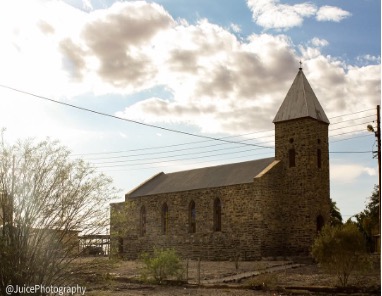
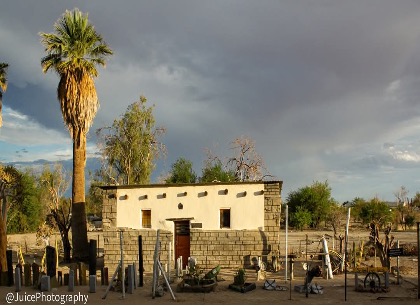
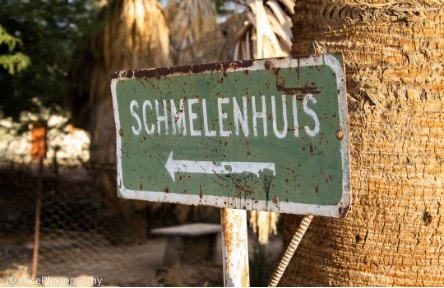
Captain Frederik is known for his history in Namibia. Bethanie has a strong history with missionaries, such as the London Missionary Society and the Rheinish Missionary Society as from the early 1800s. One of the key missionaries was known as Reverend Heinrich Schmelen, who is reported to have built the Schmelenhaus in “1814, now considered the oldest building in Namibia”. Today there is a neighborhood named after him called Schmelendorp’. Other historical buildings include the Schmelen House of Euro African architecture, Mission Church, the Evangelical Church Complex, the Mission Church, the Schmelen Collage and the old cemetery.

The proclamation of being a village council attracted vast government resources for infrastructural development and human resources for management and administration of government institutions. Thirdly the rich history of battles fought which involved Germans, British, South Africans and Portuguese of the colonial period and battles fought by Namas make it a prominent historical battle field. The strategy considered that the greater part of the village is to service the farms nearby, while the region is full of potential for tourism and farming, the population is low.

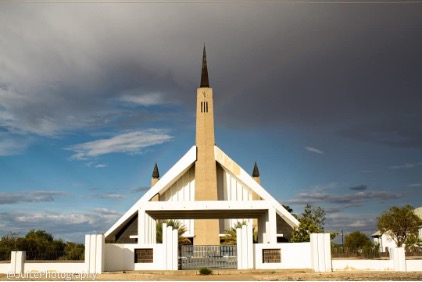
Bethanie endows the historic moments of Namibia with some of the oldest events taking place in that small village. In Bethanie, one enjoys worldly resilient and outright divinity of early missionaries in Namibia. Coming from Europe their preferred destination in Namibia, settling in a hut to spread the word of God to local tribes must have been exceedingly challenging, suggesting people made of sterner stuff than most of us are today. This now mainly bypassed and forgotten town has an interesting early history, chequered but nonetheless typical of the era. Bethanie is dominated by church steeples – modern and historical, some of which were built and consecrated in 1859 and become the first church in Namibia.The first inhabitants of Bethanie are !Aman descendants of the Oorlam people originating from the south of the Orange River, who settled in and around Bethanie as early as 1804.Two simple houses – both declared national monuments – of historic value are the intriguingly layered stone Josef Fredericks’ House in the main street and Schmelen House in the vicinity of the twin-tower church, which is regarded as the oldest existing building in Namibia. The then Nama captain, Josef Fredericks, was involved in the signing of the so-called first ‘protection treaty’ with the Germans in 1884, thus officially incorporating the territory around Bethanie into the German Protectorate, something the Namas would later come to regret. In 1883, in this same notorious dwelling, Josef Fredericks also signed away Angra Pequena (Lüderitz) to the German trader, Adolf Lüderitz

Mission Statement

"Bethanie Village Council exists to provide excellent municipal services to its residents, investors and visitors by sustainably utilizing all its available resources through good Governance and teamwork for economic, physical and social development."

Vision Statement

"The Preferred Oasis and Top Destination where all enjoy its excellent services and infrastructure within its unique natural beauty."

Core Values

Purpose of Bethanie Village Council’s Strategic Plan

Strategic Plan

To operationalise its Mandate, Bethanie Village Council developed a Strategic Plan to guide its operations (2023/24-2027/28).

Strategic Planning is a process by which leadership, management and staff develop a Plan which will enable them to move their organization from point A to B, where this point is better than A. The outcome of this process is a Strategic Plan Document. A Strategic Plan specifies the long-term plan of where an organisation wants to be over a certain period. Overall, the Strategic Plan presents outcomes to four fundamental questions asked in formulating a Strategic Plan, namely:

When implemented successfully, a Strategic plan presents several benefits, such as enabling the Council to formulate better strategies using a more systematic, logical, and rational approach to strategic choices. A Strategic Plan allows the Council to initiate and influence activities, thus exerting control over its destination.

Frequently Asked Questions (FAQs)

You must submit a formal project proposal to the Bethanie Village Council. The proposal will be reviewed by the relevant technical committees, and if it meets planning, environmental and regulatory requirements, it will be forwarded to Council for consideration and approval. Investors may contact the Council office for guidance and required documents.

Land applications go through verification, availability checks, valuation review and allocation procedures. Once assessed, the application is presented to the Council for final approval. Applicants are notified in writing once a decision has been made. You may follow up at the Property Division for status updates.

Rates and taxes are based on the value of your property, service delivery costs, and Council-approved tariffs. Tariffs are reviewed annually during the budget process and must comply with national regulations.

Report sewer overflows immediately to the Council’s Technical Services or call the Customer Service office. Provide your location, erf number (if possible), and a brief description so a sewer truck or maintenance team can be dispatched.

Reach Out

Contact us and we can help